
One platform.
Multiple markets.
A single physical principle.
Vortifer Drive is a scalable
propulsion architecture – patent-protected, physically validated, and structured for systematic deployment across sectors.
PLATFORM
From technology to platform.
Vortifer Drive has evolved. What began as a novel propulsion principle is now a structured technology platform. Validated physics, a defined IP position, and a reusable architecture that can be configured across different performance classes and application contexts.
The value is not in a single drive unit. It lies in the platform’s ability to generate standardised, reproducible system configurations for multiple markets, without rebuilding the technological core.
Scaling happens through configuration, not through new technology.
More precisely: Vortifer Drive is a technology and decision platform. It does not only configure physical systems. It structures requirements, derives configurations systematically, and enables repeatable, fact-based decisions before capital enters hardware.
IP Position
IP Position
International patent protection secures the physical working principle. The core cannot be replicated from the outside.
Simulation & Configuration
Simulation & Configuration
System decisions are made before hardware. Configurations are derived systematically from a quantified simulation environment.
Integration Capability
Integration Capability
Clearly defined integration interfaces enable efficient OEM integration across different application contexts and market segments.
TECHNOLOGY
Closed toroidal geometry.
Structurally different – by design, not by optimisation.
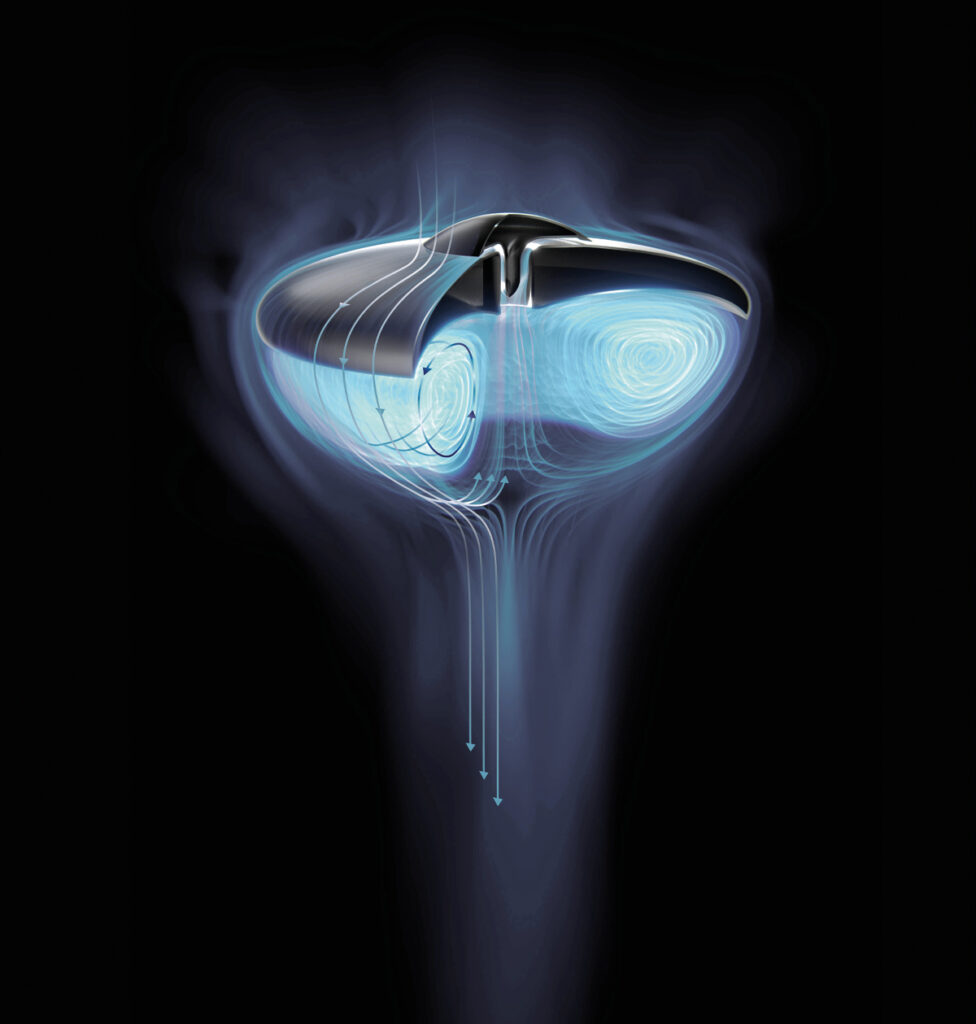
At the core of Vortifer Drive is a closed, toroidal flow architecture in which controlled vortex structures are generated and guided with precision. The decisive properties do not emerge at component level. They result from the interaction of the complete system.
This is not a design choice. It is a physical necessity. And it is the structural basis for scalability across different markets and performance classes.
Three requirements. One architecture. No trade-offs.
Efficiency
Efficiency
Use-case referenced, not an isolated efficiency metric.
A system is efficient when it delivers exactly the required performance in a concrete application profile – range, mission duration, robustness, system safety.
Signature
Signature
Acoustic and electromagnetic. Not a retrofit optimisation. It results as a systemic property of the closed flow architecture – inherent, not added.
Scalability
Scalability
Through configuration of the same physical core – not through product variants or volume ramp-up. The same architecture, adapted to different performance classes and target markets.
Conventional propulsion development optimises these dimensions against each other. The Vortifer architecture addresses all three simultaneously. As a structural consequence of integrated design, not as an engineered compromise.
Two layers of protection. One structural moat.
Patent Protection
International IP protection secures the physical working principle. Legal clarity at technology and system level across jurisdictions.
Structural
moat
System Complexity
The platform’s value lies not in individual components but in the interplay of models, system knowledge, architecture and decision logic: Developed over time, end-to-end integrated. Not trivially reproducible, even with access to individual elements.
MARKETS
One core. Multiple sectors.
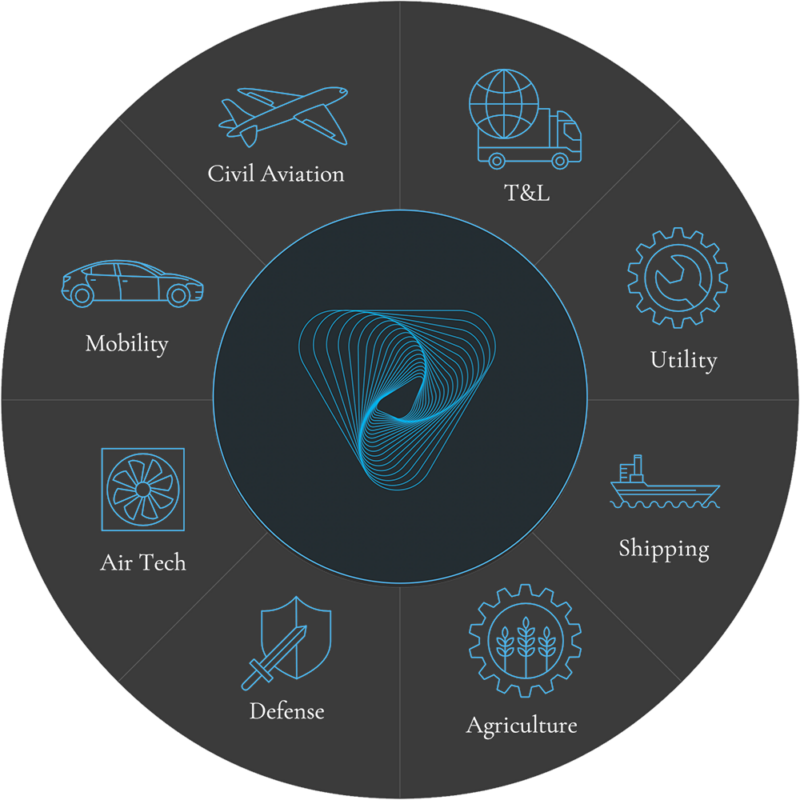
Scaling at Vortifer Drive does not follow a product variant logic. It follows a platform logic: the same technological core is configured for different application environments. The technical foundation remains unchanged. Performance parameters, integration depth and application design adapt to each use case.
Every additional application strengthens the platform itself not just the market presence. Scaling is structural, not sequential.
Market Entry
First market: Security & Dual-Use.
The rationale is structural, not opportunistic. Security and Dual-Use markets offer clearly defined requirements, structured decision-making processes, and the opportunity to validate systems under demanding conditions before scaling into civilian markets.
Market entry is demand-driven: programme requirements define the configuration, not existing products.
Dual-Use is an entry path, not an endpoint. The platform architecture remains fully scalable into civilian markets, without structural constraints for subsequent sectors.
Scaling
Intra-sector scaling illustrated: Logistics.
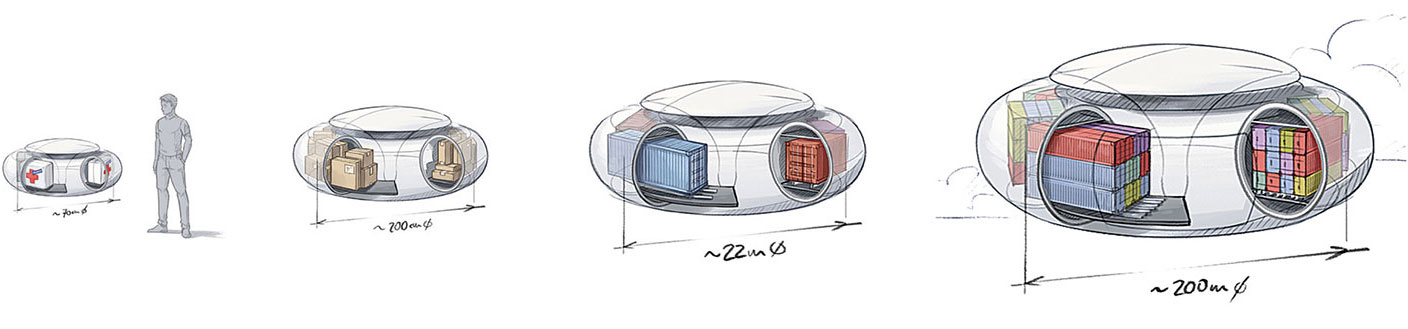
Same platform core. Same physical principle. Configured across different scale requirements. The logistics sector illustrates how structural platform leverage works within a single market segment.
One platform.
Multiple markets.
A single physical principle.
Vortifer Drive is a scalable propulsion architecture – patent-protected, physically validated, and structured for systematic deployment across sectors.
One platform.
Multiple markets.
A single physical principle.
Vortifer Drive is a scalable propulsion architecture – patent-protected, physically validated, and structured for systematic deployment across sectors.
PARTNERS
Platform owner. Not OEM.
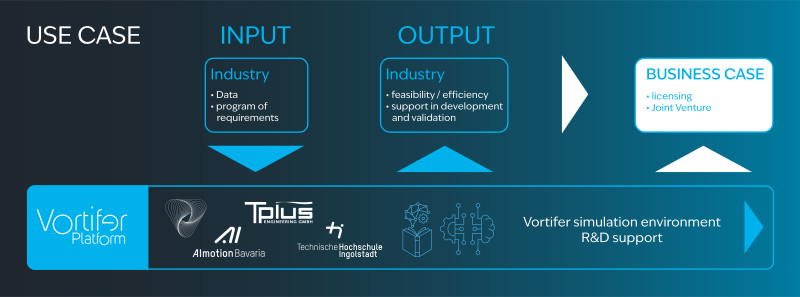
Serial production would bind capital, slow scaling, and dilute the platform leverage. Vortifer Drive operates as platform, architecture and technology owner – working with partners who bring market access, certification capability and industrial manufacturing strength.
The division is deliberate: partners monetise products. Vortifer Drive monetises the platform. The result is a scalable structure with low capital intensity and accelerated market access for both sides.
Vortifer Drive
IP & Patent Position
System architecture & design
Configuration & simulation
Integration interfaces
R&D support
Partner
Market access
Certification
Industrialisation
Series production
Sector expertise
Co-Development
Co-Development
Joint development with industry partners. Requirements define the configuration – programme needs first, not existing products.
Licensing/Royalty
Licensing/Royalty
Recurring licence streams from platform use. Structured per application, market segment and configuration depth.
Joint Ventures
Joint Ventures
Selective, where structurally appropriate. Partner handles execution and market. Vortifer Drive retains platform ownership and value.
Current ecosystem



Additional industry partnerships in development. –> Partner enquiries: [Contact]
INVESTORS
Not a vision. A validated starting point.
Structured scaling begins precisely at this point: not through further fundamental discussions, but through controlled execution along an already established decision and platform logic.
A platform investment case. Not a product bet.
What Vortifer Drive offers is not a stake in a specific drive unit or a single market application. It is a position in a scalable technology platform with validated physics, a defined IP position, and a reusable architecture that generates value through configuration and replication, not through unit volumes.
The valuation framework shifts accordingly. What matters is the robustness, adaptivity and long-term scalability of the platform architecture not short-term product scaling.
The platform does more than configure physical systems. As a decision platform, it structures requirements, derives configurations systematically, and enables reproducible, fact-based decisions before capital enters hardware. This capability reduces development risk for partners and creates a structurally replicable path to new markets.
Platform Leverage
The same architecture across multiple configurations, applications and markets. Value through reuse and derivation not through per-product development cycles.
Structural Risk Reduction
Core technology and system questions quantified before capital enters scaling. Decisions are simulation-based and made before hardware commitment.
Strategic Optionality
New markets, applications and revenue paths accessible without rebuilding the technological core. Multiple dimensions of upside, structurally embedded.
Where the risk sits. And where it doesn’t.
The core technology risk has been addressed. The physical principle is validated. Central system decisions are made before hardware: simulation- and data-based.
The remaining risk profile has shifted: away from open research questions toward application, integration and scaling. Combined with market entry, partner structuring and operational execution.
These risks are named, transparent and structurally manageable. They represent the typical profile of a platform entering its scaling phase.
CONTACT
Structured conversations welcome.
Whether approaching as an investor, industry partner or from a strategic context – we welcome focused, bilateral dialogue.
